📄 Digital book in PDF · read it on your phone or print it
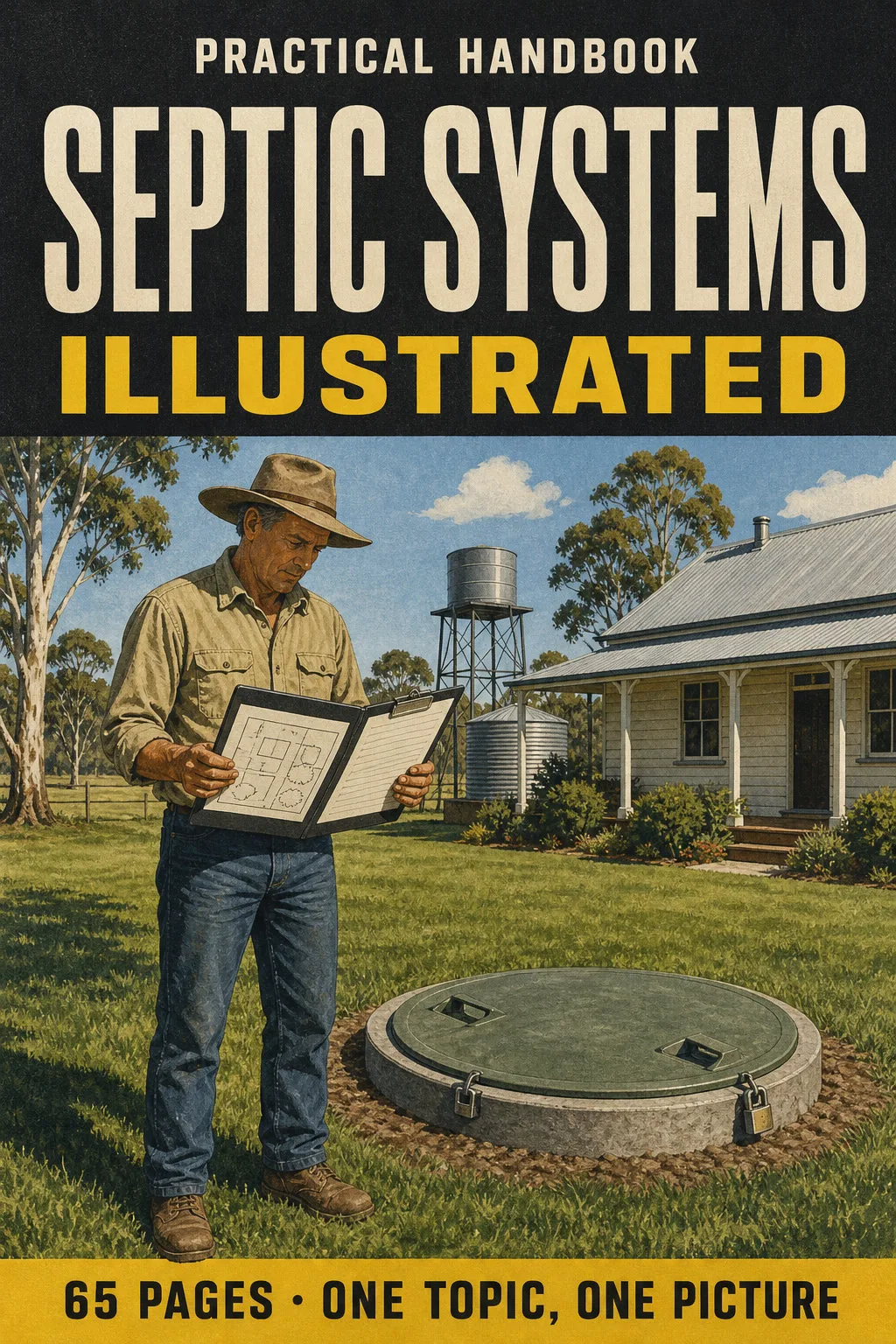
Where the tank is and what happens inside it, what's under the trench, how an aerated system (AWTS) differs, what never goes down the drain, the warning signs and when it needs pumping out. Every topic has its own page: the drawing first, then what you need to remember, with the plumber's words explained. 65 illustrated pages.
🔒 Secure checkout · PDF by email · 30-day guarantee
Every page has one big drawing and a box with the rules, distances and steps you need to know:


Swipe to see more →
These are real pages from the book. The table of contents is the full one: 8 parts and 61 topics.
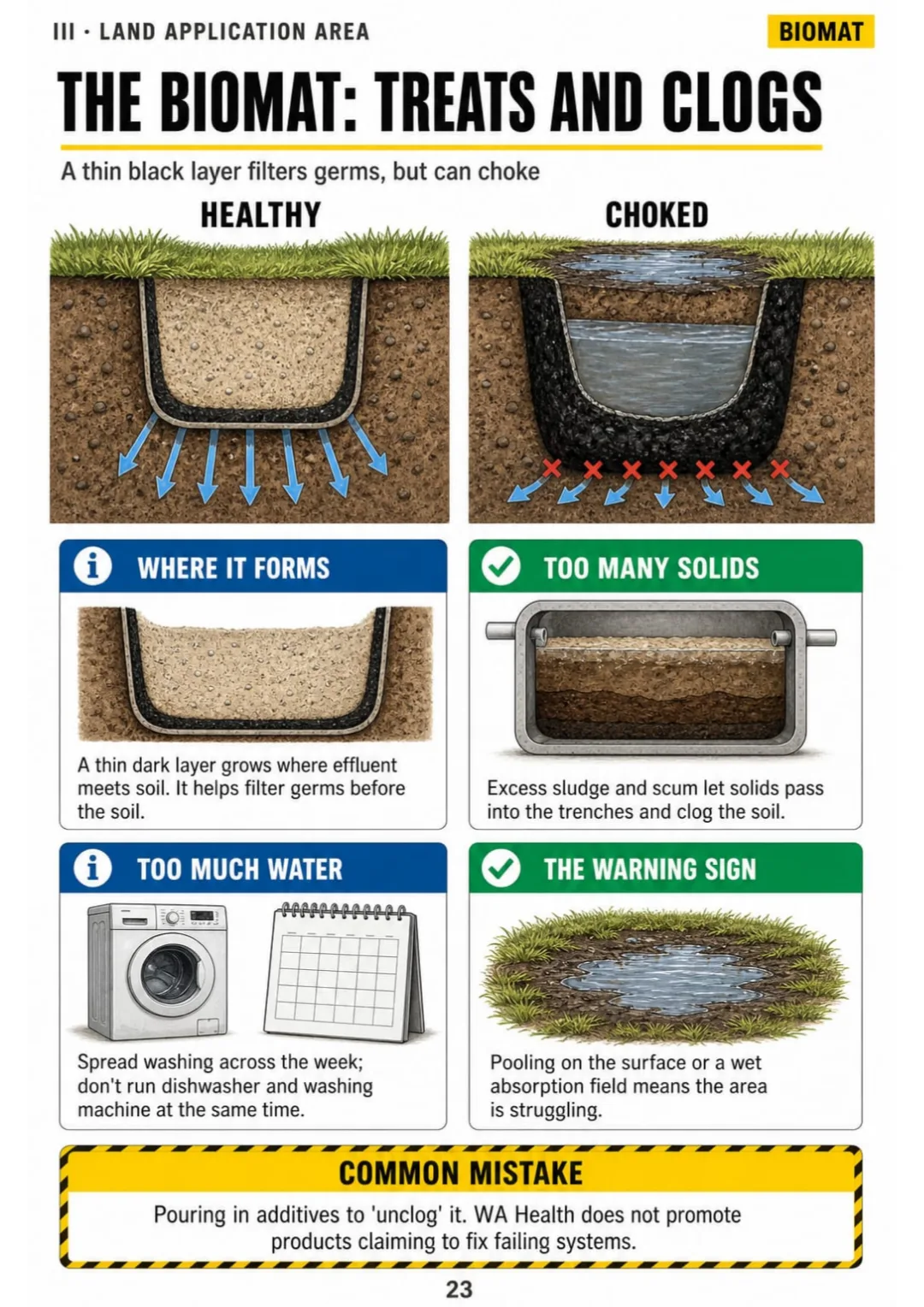
You're standing over the trench after a week of rain. The grass is soggy, there's a smell, and the plumber on the phone says 'sounds like your biomat's choked'.
So you look it up. The council fact sheet covers it in long paragraphs about clogging layers, hydraulic loading and soil pores. Three lines in, you still can't picture what's under the grass.

In the book, the biomat is one page: a cross-section of the trench with a healthy biomat on one side and a choked one on the other. Solids and too much water are labelled as the two things that clog it.
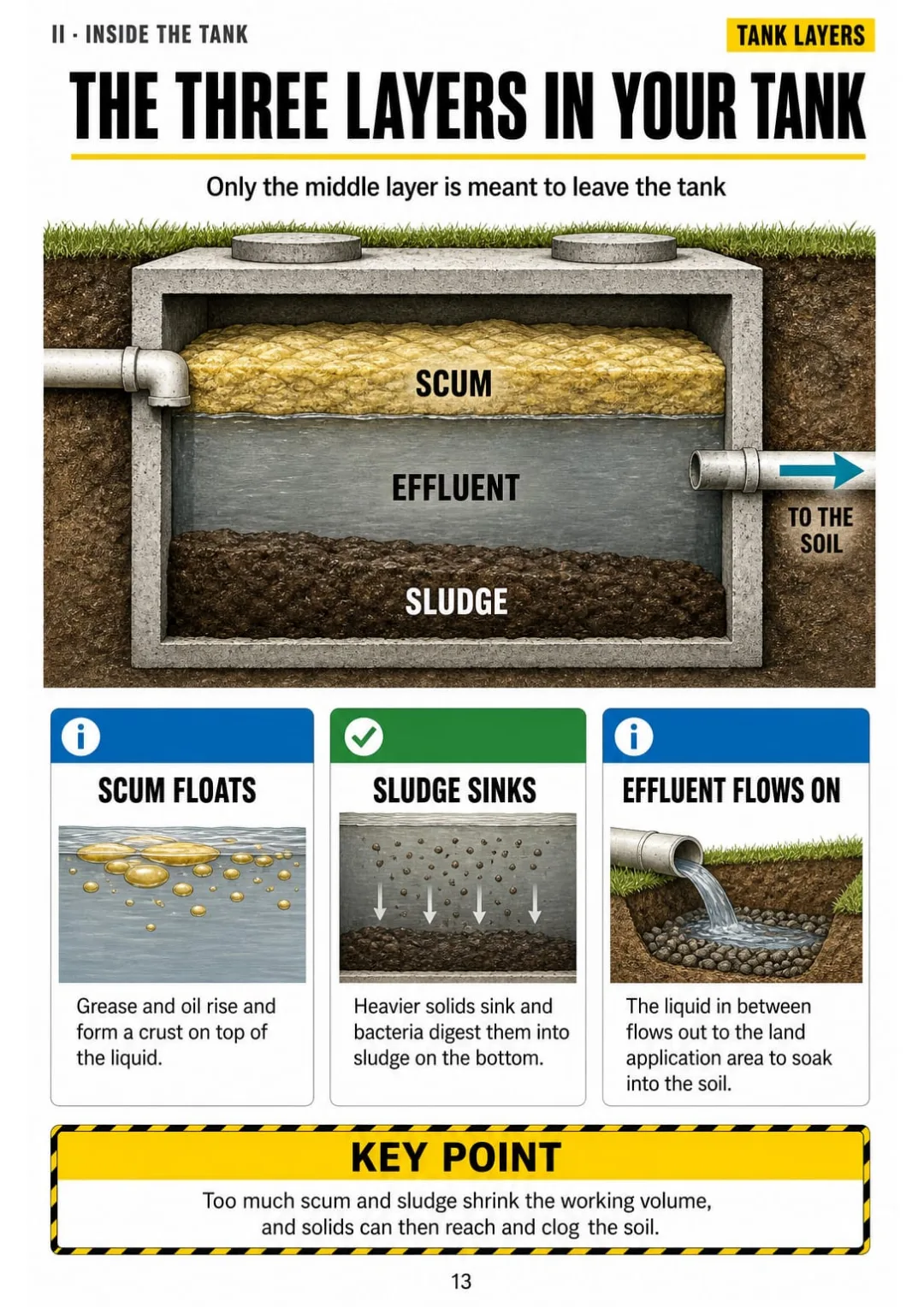
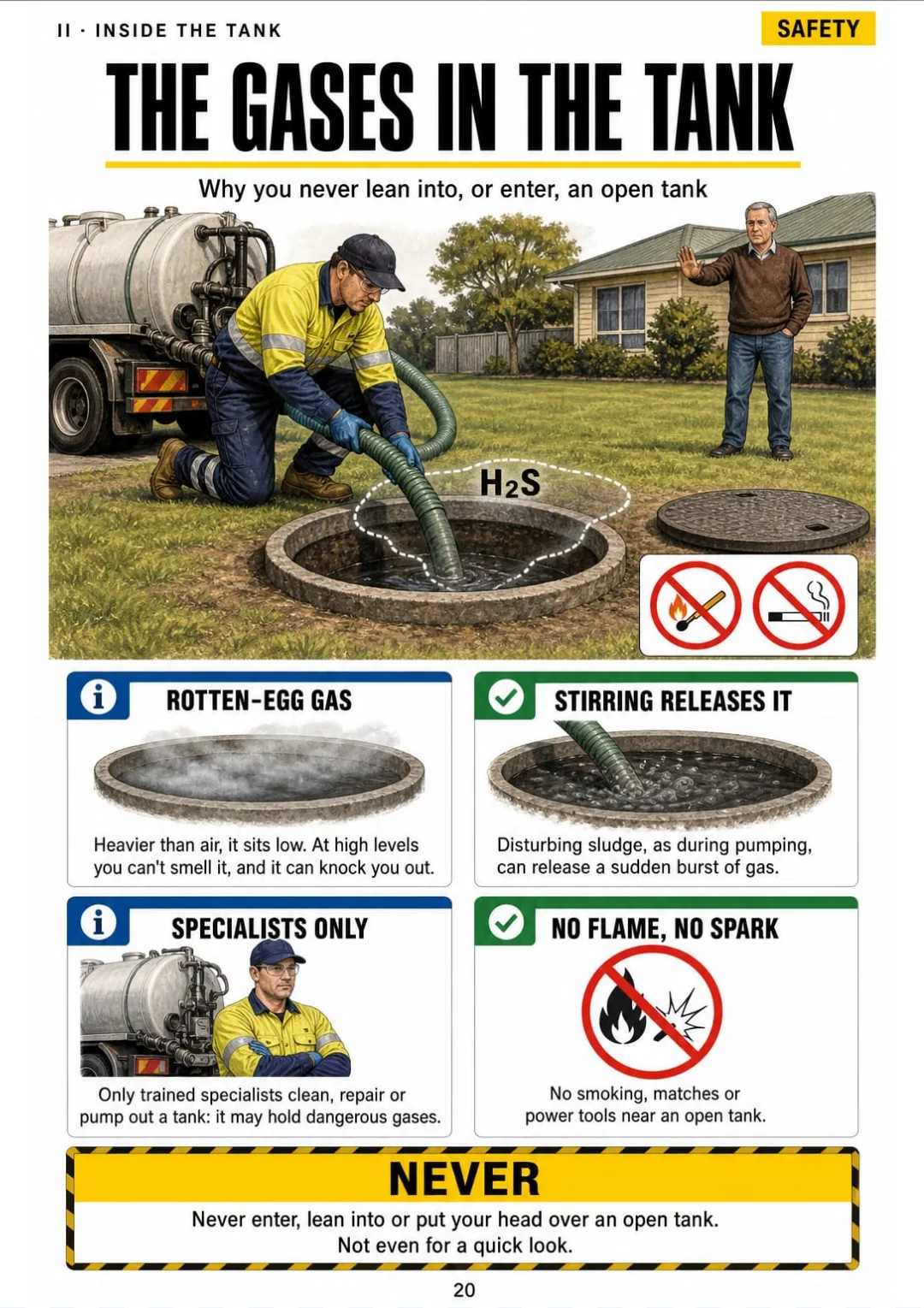
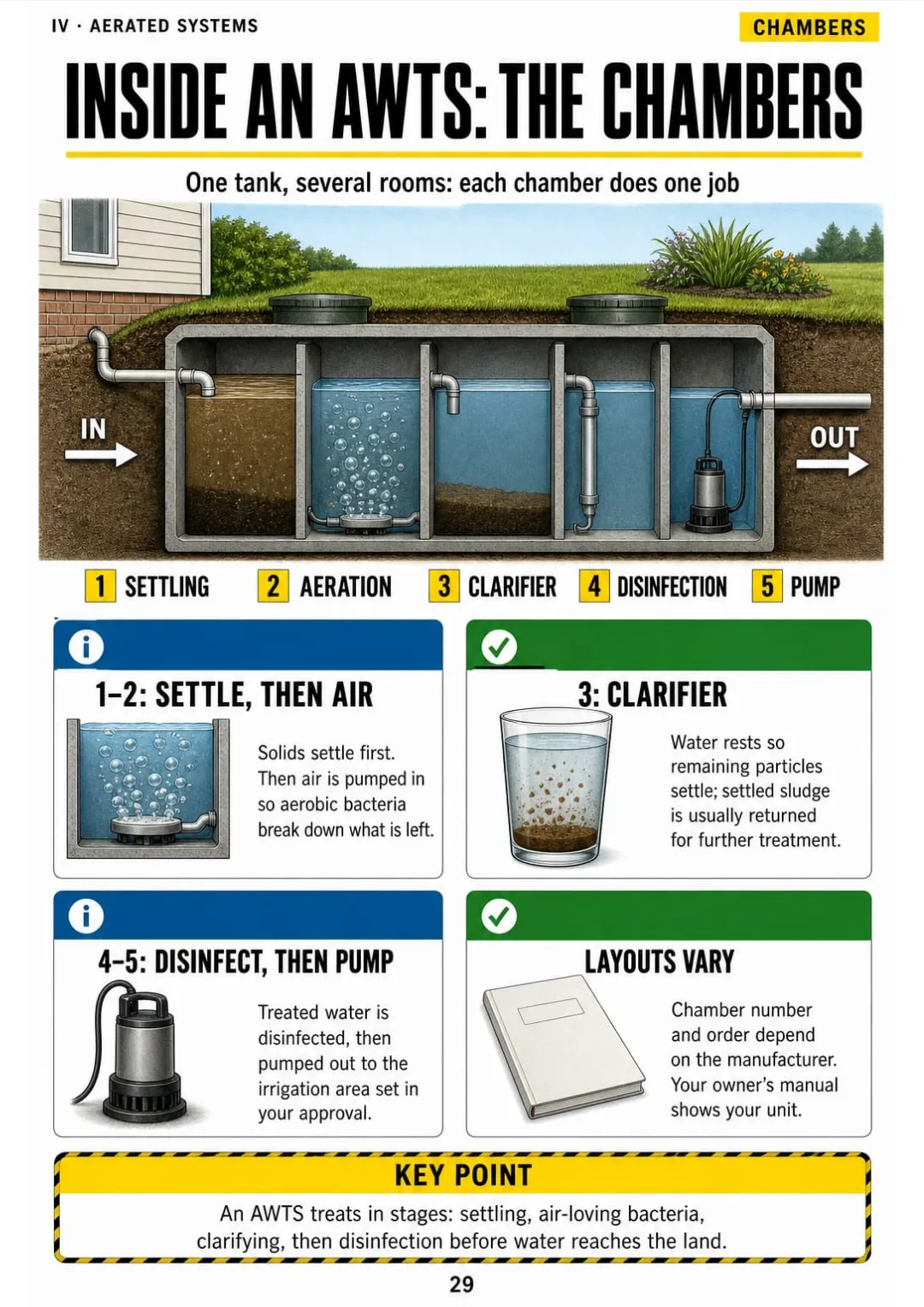
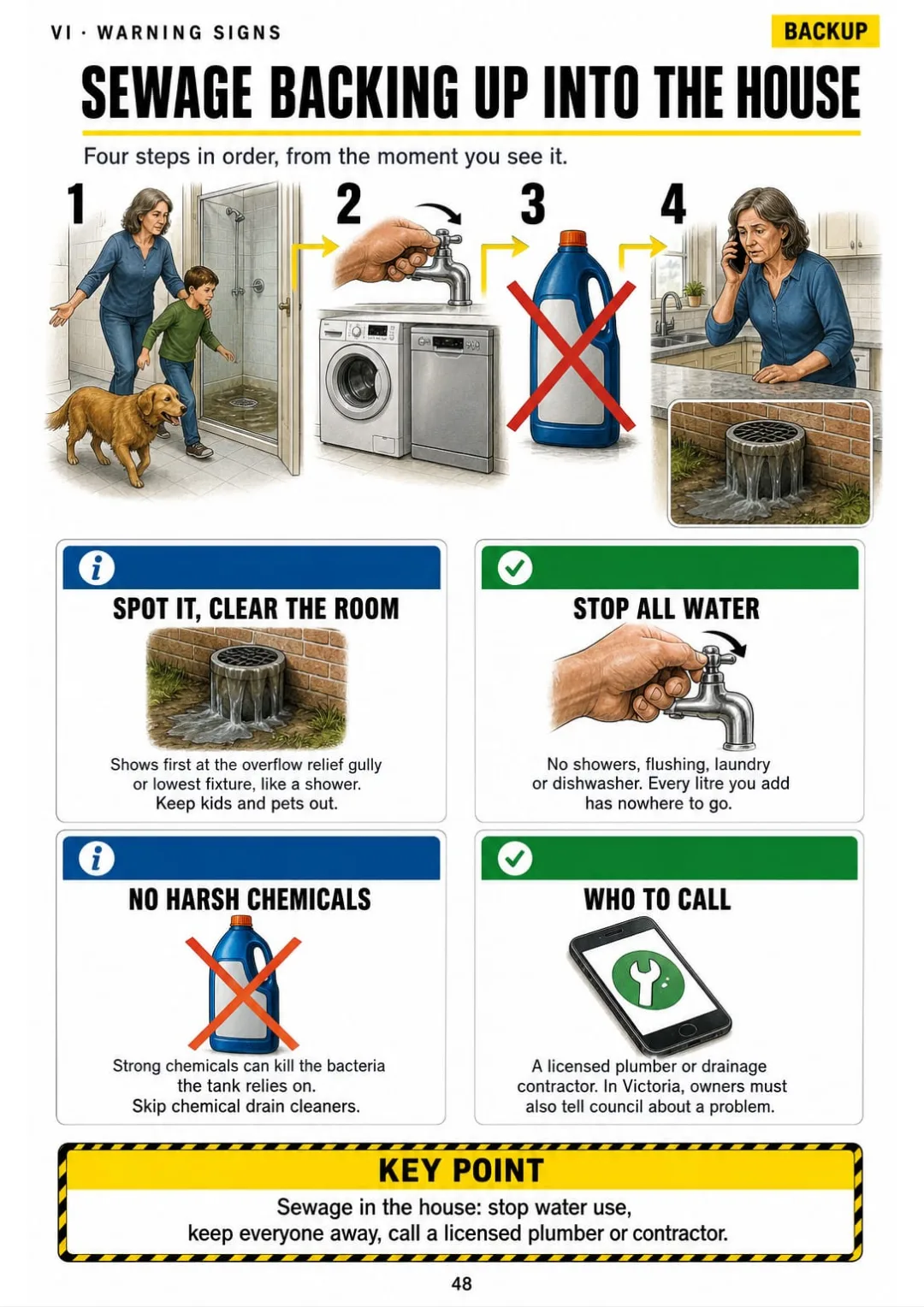
The three layers in the tank, the gases, the five chambers of an AWTS, sewage backing up into the house and desludging get the same treatment: one page each, drawn and labelled.
Now you know what's happening under your feet and what comes next. You can tell a job for you from a job for a registered contractor, without digging out the fact sheet again.

How the system works, inside the tank, the land application area, aerated systems, day-to-day care, warning signs, safety and desludging, and your system on one page: 65 pages, all illustrated
Think of it this way:
It's Sunday night, the guests have just left the holiday house and the toilet is slow to empty. A drain is gurgling. You need to know now: is this tonight's problem or a Monday phone call?
You open the book at the page on emergencies and bookings and see a traffic light: sewage inside the house is red, slow drains are amber, routine service is green. Beside it, what you do and what the contractor does.

Same with the three layers in the tank, the biomat under the trench, the five chambers of an AWTS, desludging and setback distances: each one on its own page.
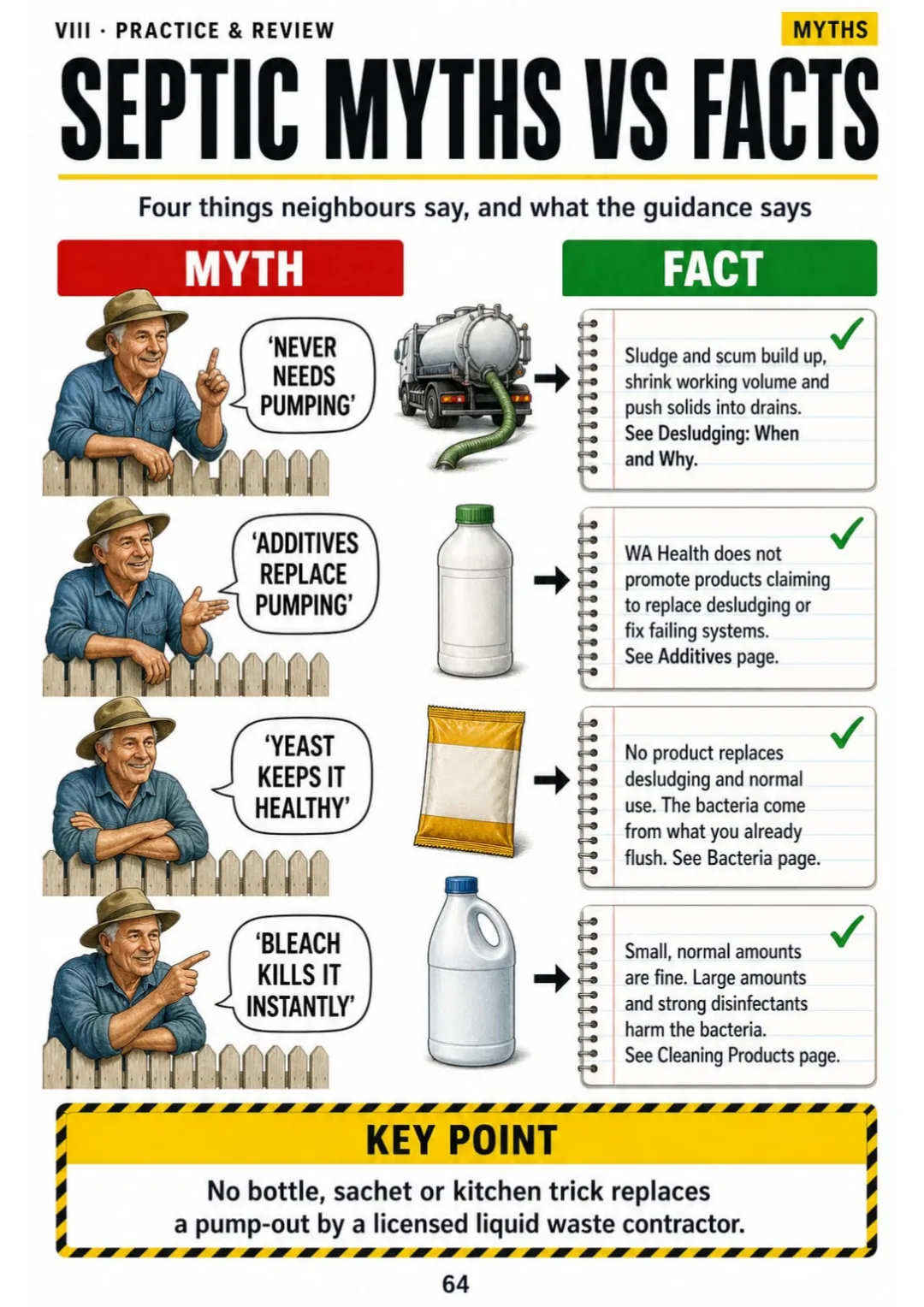
Septic Systems Illustrated is 65 illustrated pages: 8 parts and 61 topics, all drawn, and at the end your system on one page: the map, the record page, the season-by-season checklist and myths vs facts.
What you see drawn, you don't have to memorize.
You finally see where your water goes: from the house drain to the tank and into the soil, blackwater and greywater, the bacteria that do the work, conventional septic vs AWTS, other systems, who sets the rules and the papers to keep.
The three layers, inlet and outlet baffles, the outlet filter, single and two-chamber tanks, tank size, materials, lids and risers, and the gases in the tank.
What the land application area does, trenches and beds, the biomat, your soil, mounds, distribution boxes and pump wells, setback distances and the reserve area.
The chambers of an AWTS, the blower, the alarm panel, chlorine tablets and UV, surface and subsurface irrigation, servicing, and power cuts and holidays.
The three Ps, the kitchen sink, food waste disposal units, the laundry, cleaning products and bleach, what never goes down the drain, additives, water use and the ground above.
You read the sign and know if it's tonight's problem or a booking: gurgling drains, smells, bright green grass and soggy patches, sewage backing up, after heavy rain or a flood, signs in your water supply, and what to tell the contractor.
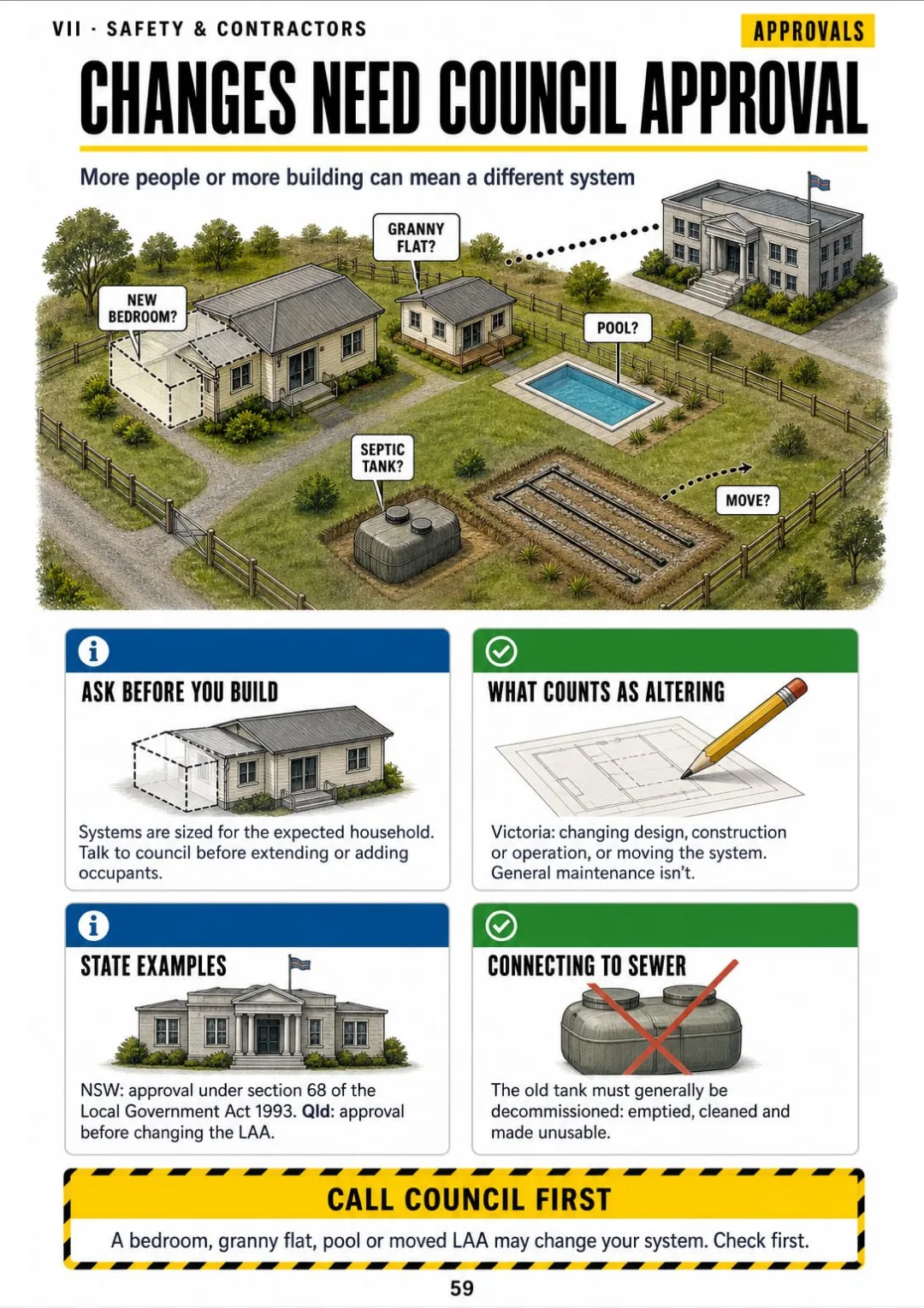
The safety rules that never change, your jobs and the contractor's, desludging and what happens on the day, choosing a registered contractor and changes that need council approval.
Find your tank and draw your map, your record page, a season-by-season checklist, the most common owner mistakes, myths vs facts and the whole system at a glance.
At the end of the book: Your own property map and record page, a season-by-season checklist, myths vs facts and the whole system on one page.
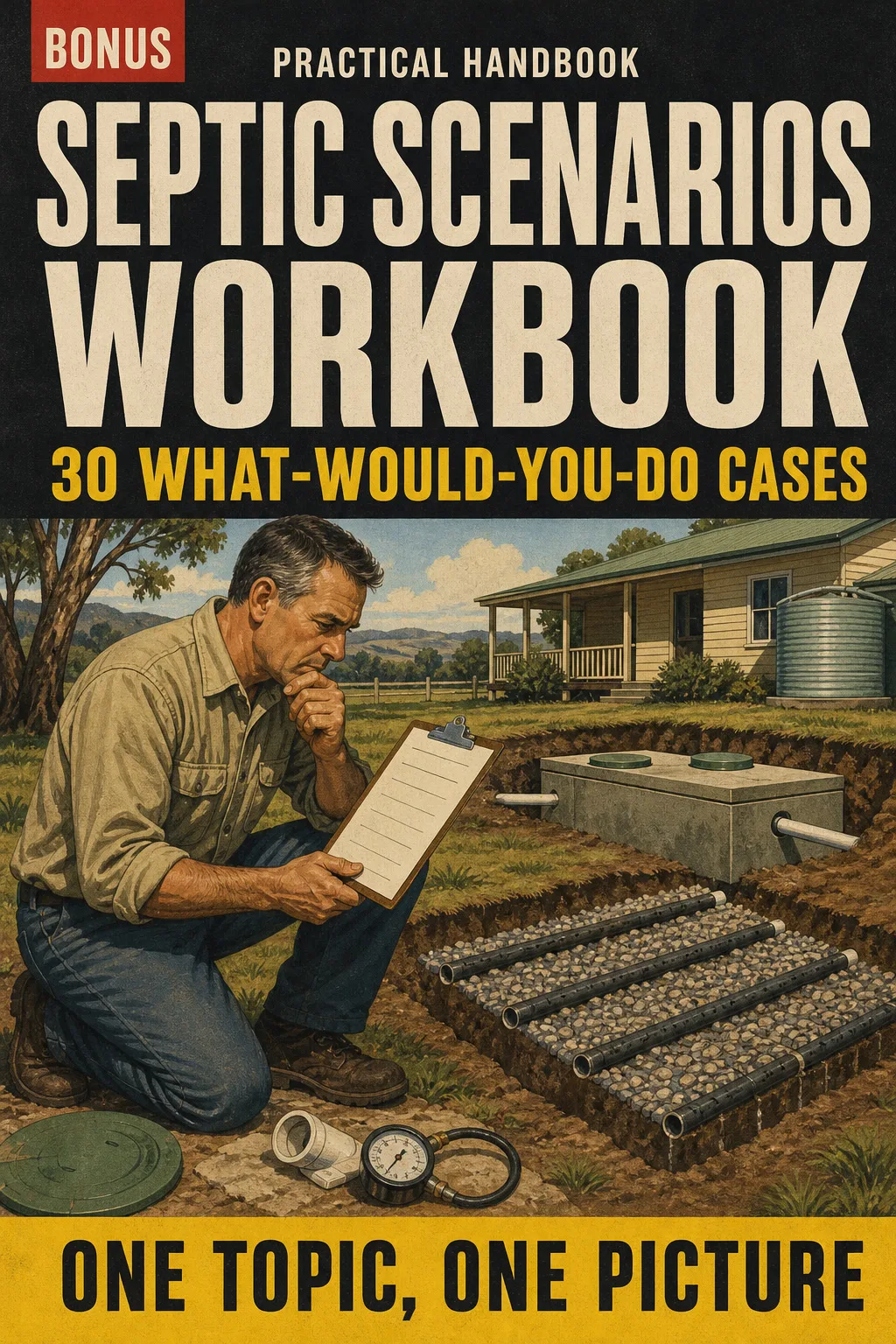
Practise on real situations (a gurgling drain, a wet patch after rain, the alarm going off at night) and check your answer, so you know what to do before it happens at your place.

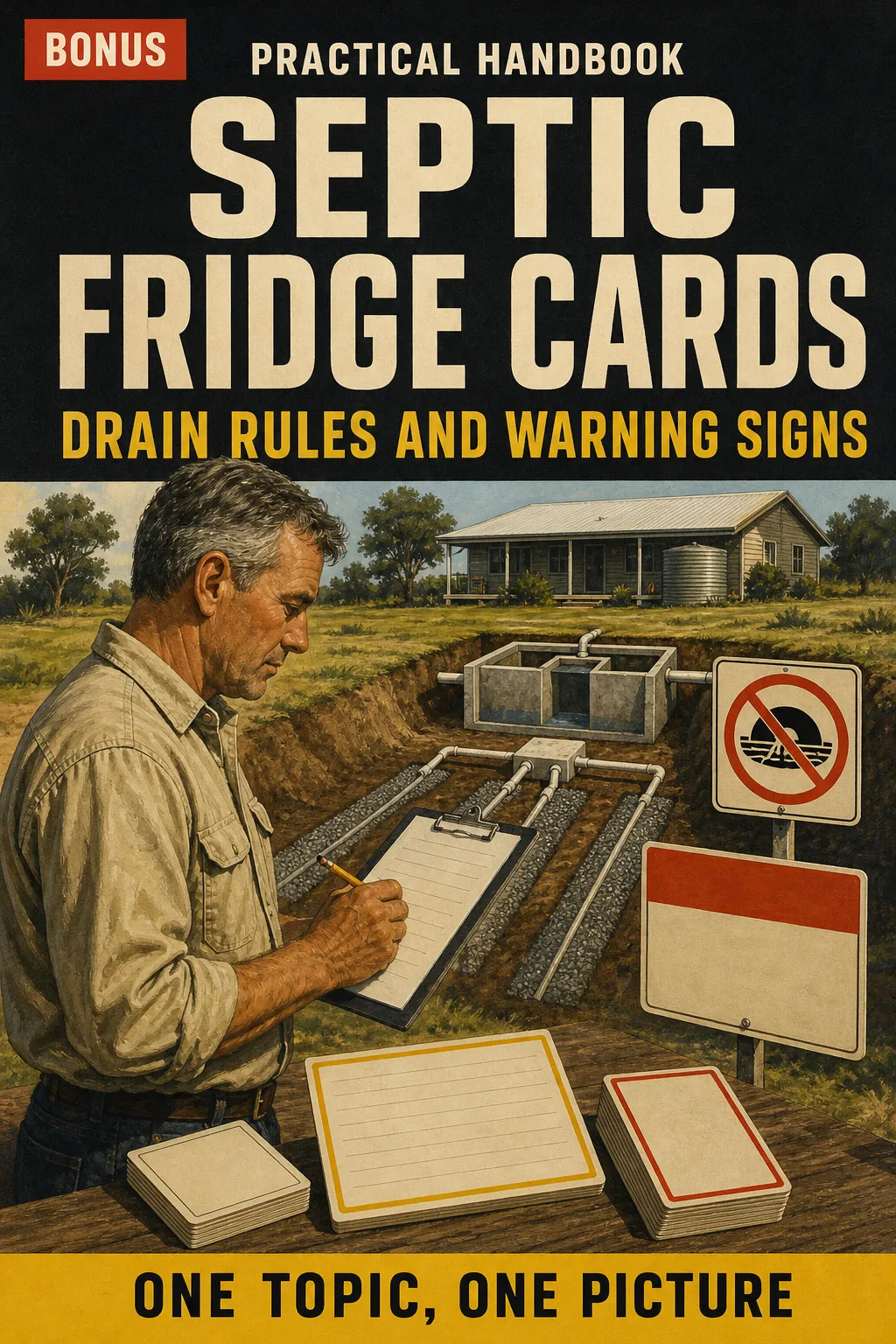
What goes down the drain, what stays out and the signs that something's wrong, on printable cards for the kitchen, the laundry and the shed.
📄 This is a digital PDF book sent to your email: nothing is printed or shipped.
PDF by email: We email you Septic Systems Illustrated as a PDF, together with the two free books. It's a single payment: no installments, no extra charges.
You see where everything is, from the house drain to the trench, and what you need to do from the first week, before anything goes wrong.
A smell, a green patch or a slow drain: you look up the sign, see what it usually means and know whether it's an emergency or a booking.
You finally see what's going on inside the tank and the soil, check your desludging and servicing against your council, and keep a simple record.
📄 This is a digital PDF book sent to your email: nothing is printed or shipped.
Try Septic Systems Illustrated for 30 days, bonus books included.
We refund everything if the file won't open, if the book isn't what you see here, if you were charged twice or if the email doesn't arrive. Just email us.
You pay once. No subscriptions.
Yes. It starts with how water gets from your house to the soil and covers both conventional tanks and aerated systems (AWTS). Every interval and distance carries a VERIFY mark so you check it with your state and council. You look after the system and spot problems; the hands-on work stays with a registered contractor.
From AS/NZS 1547 on on-site domestic wastewater, the AS/NZS 1546 series on septic tanks and AWTS, and owner guidance from state regulators such as NSW Health, EPA Victoria, SA Health and the WA Department of Health. They're cited to describe the content; no text or tables are reproduced.
No. It's an independent illustrated guide for owners. It isn't issued, approved or endorsed by any standards body, state regulator or council.
No. It helps you understand your system, care for it day to day and recognise warning signs. Repairs, desludging, electrical and pump work, and any changes to the system are for a registered contractor, with council approval where required.
Yes, as an owner's guide anywhere in Australia. How the tank, the trench and an AWTS work is the same in every state. What changes is the rules: desludging and service intervals, setback distances and approvals. So the book shows you how to find your state's and your council's requirements, and every interval and distance carries a VERIFY mark to check with them.
In PDF by email, to the address you enter at checkout.
No. It's a one-off payment, with no subscription.
Yes. The PDF is laid out to print at home or at a print shop, so you can keep it in the laundry or the shed. The fridge cards are made to print too.
You have 30 days. We refund everything if the file won't open, if the book isn't what you see on this page, if you were charged twice or if the email doesn't arrive: just email us.
No more rereading fact sheets that don't stick.
The tank, the trench and the warning signs: you see them drawn and that's it.
You face the next smell, alarm or contractor visit knowing where everything is.
Drawings make studying faster.
The book is right below.
One-time payment: US$ 27 · Guarantee: 30 days · PDF by email
YES, I WANT SEPTIC SYSTEMS ILLUSTRATED FOR US$ 27📄 This is a digital PDF book sent to your email: nothing is printed or shipped.